
Introduction
Karva Chauth is one of the most cherished festivals among married Hindu women, symbolising love, commitment, and the enduring bond between spouses. Celebrated across North India, especially in states like Punjab, Haryana, Uttar Pradesh, and Rajasthan, it involves fasting from sunrise to moonrise for the husband’s well-being and longevity. Over time, this age-old tradition has evolved, blending cultural beauty with modern sentiment. Let’s explore the timeless rituals and heartfelt customs that make Karva Chauth such a deeply meaningful celebration.
1. The Pre-Dawn Sargi Tradition
The day begins before sunrise with the Sargi — a special meal prepared by the mother-in-law for her daughter-in-law. It includes fruits, sweets, dry fruits, and traditional delicacies to give strength for the day-long fast. This ritual symbolises love and blessings, making it one of the most emotional parts of the day.
2. Dressing in Vibrant Attire and Jewellery
Women adorn themselves in bright sarees or lehengas, often in shades of red or maroon that signify love and prosperity. Traditional jewellery, bangles, and henna complete the look. Beyond aesthetics, dressing up beautifully is believed to invoke positive energy and joy, enhancing the festive spirit.
3. Applying Mehendi: A Symbol of Love
The intricate mehendi (henna) designs applied on hands and feet are more than decoration — they represent happiness, prosperity, and deep affection between partners. According to tradition, the darker the colour of the mehendi, the stronger the love between husband and wife.
4. Fasting from Sunrise to Moonrise
The essence of Karva Chauth lies in the fast, where women abstain from food and water throughout the day. This act of devotion is performed with sincerity and faith, representing endurance, strength, and unwavering love. Many couples now observe the fast together, symbolising equality and shared commitment.
5. The Puja and Storytelling Ceremony
In the evening, women gather to perform Karva Chauth Puja, where they listen to the Karva Chauth Katha (the legend of Queen Veervati). The story reinforces faith, patience, and the power of devotion. The circle of women exchanging decorated karvas (clay pots) creates a sense of community and sisterhood.
6. Moonrise Ritual and Breaking the Fast
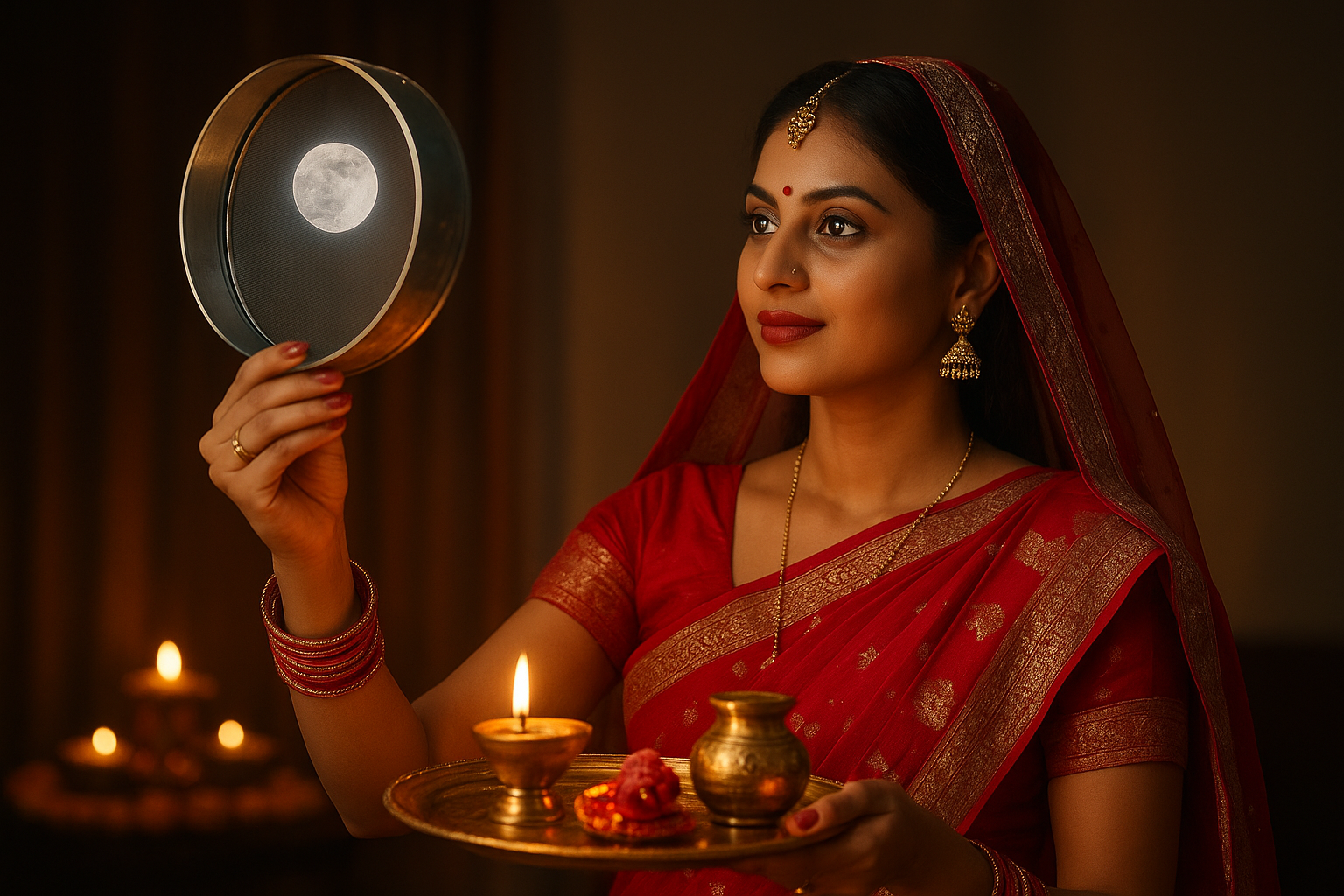
As the moon rises, the much-awaited ritual begins. Women view the moon through a sieve or dupatta, then look at their husbands — a gesture symbolising eternal love. The husband offers the first sip of water or a morsel of food, breaking the fast with affection and gratitude.
7. Modern Celebrations and Changing Traditions
Today, Karva Chauth has beautifully evolved. Many couples celebrate it as a joint expression of love rather than a gender-specific fast. Social media adds creative touches — from virtual pujas to gifting trends. Yet, at its core, the festival continues to honour love, faith, and the sacred marital bond.
FAQs
1. What is the main significance of Karva Chauth?
Karva Chauth symbolises love, trust, and commitment between married couples. Traditionally, women fast for their husbands’ long life, though many couples now observe the fast together to celebrate mutual respect and equality.
2. Who can observe Karva Chauth?
While traditionally observed by married women, today many unmarried women and even men participate, seeking blessings for love, commitment, or their partner’s well-being.
3. What is included in the Sargi?
Sargi usually includes fruits, sweets, dry fruits, parathas, and coconut water — foods rich in nutrients to provide energy throughout the fasting day.
4. Is water allowed during the Karva Chauth fast?
Traditionally, women abstain from both food and water from sunrise to moonrise. However, some modern interpretations allow sipping water for health reasons.
5. What does the moon-viewing ritual symbolise?
Looking at the moon through a sieve before seeing one’s husband symbolises filtering out negativity and embracing pure love, faith, and longevity in marriage.
Conclusion
Karva Chauth stands as a beautiful blend of tradition and emotion — a festival that celebrates love in its purest form. While its customs may adapt to modern times, the essence remains timeless: devotion, trust, and togetherness. Whether observed traditionally or with a modern twist, its spirit continues to strengthen relationships year after year.