
Introduction
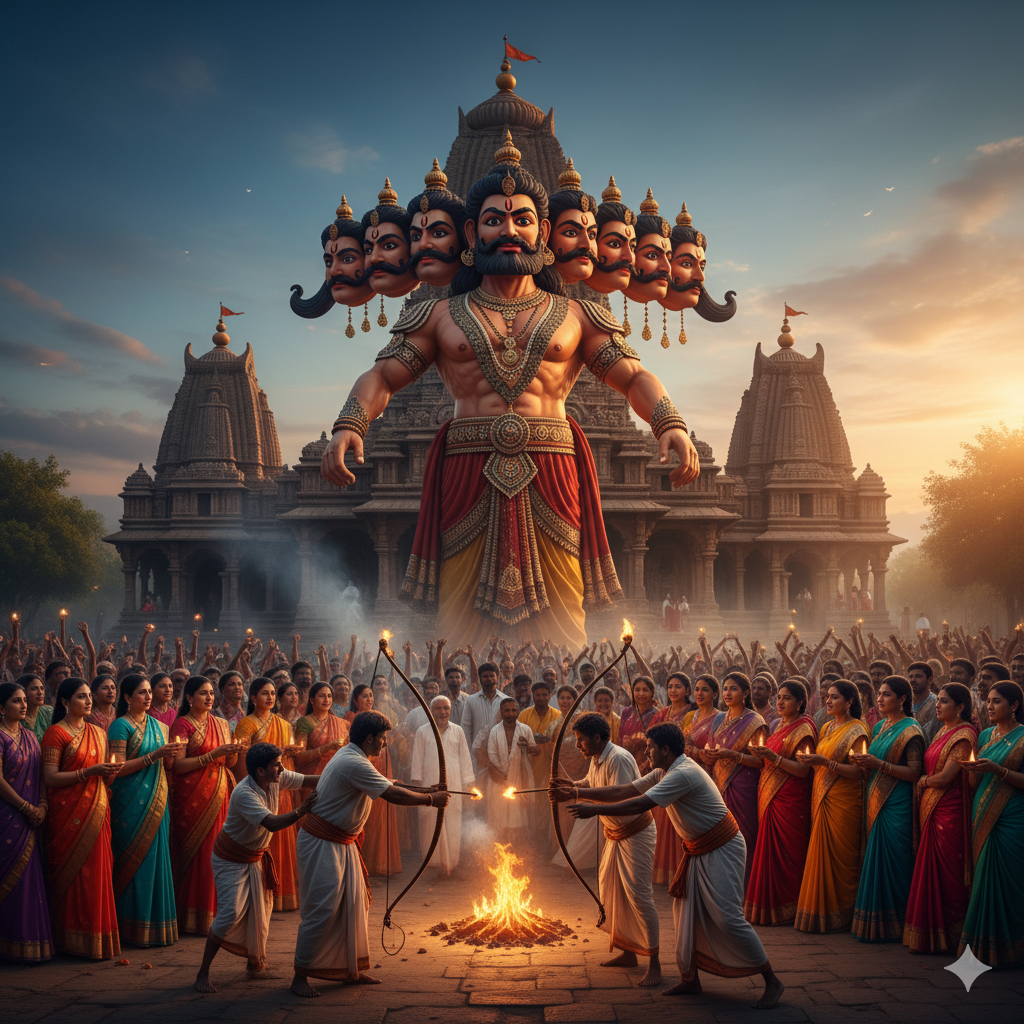
Every year, the Dussehra Festival, a vibrant Indian festival, arrives with celebrations that light up towns, cities, and villages, bringing together communities across India and beyond. Known as Vijayadashami in many regions, this festival is not only a grand cultural occasion but also a spiritual milestone that symbolises the timeless victory of good over evil. Rooted in epic tales and centuries-old traditions, it carries layers of meaning that go beyond the surface of rituals and festivities.
At its core, Dussehra reminds people of the importance of moral values, the courage to confront injustice, and the power of unity. The burning of Ravana’s effigies, the performances of Ram Leela, and the artistic grandeur of Durga idols are all expressions of a deeper truth—that goodness, when nurtured, has the strength to overcome darkness. For many, the day also marks a time of renewal, when families set aside negativity, begin new ventures, and celebrate knowledge and learning.
The Historical Roots of Dussehra
The origins of Dussehra are deeply rooted in India’s epic traditions, and the stories behind it continue to inspire countless generations. The most widely recognised tale comes from the Ramayana, where Lord Rama, guided by virtue and unwavering devotion, defeats the ten-headed demon king Ravana. This dramatic battle not only represents the triumph of good over evil but also symbolises the eternal struggle between righteousness and arrogance, compassion and cruelty, humility and unchecked pride. The burning of Ravana’s effigies during the festival is more than a spectacle—it is a symbolic reminder that destructive forces within society and within ourselves can and must be overcome.
In another context, Dussehra is closely associated with the legend of Mahishasura Mardini, where Goddess Durga battles the shape-shifting demon Mahishasura for nine intense nights. On the tenth day, she emerges victorious, reaffirming the power of divine energy and the strength of perseverance. This story gave rise to the vibrant celebration of Navratri, which culminates in Dussehra, linking devotion, discipline, and resilience with the joy of victory.
Cultural Significance Across India
Dussehra celebration varies widely across regions, reflecting India’s diverse cultural tapestry. In the north, effigies of Ravana, Meghnath, and Kumbhkaran are burnt during grand processions, often accompanied by fireworks and performances. In the east, particularly in West Bengal, it marks the end of Durga Puja, with elaborate rituals and artistic displays. In the south, Dussehra is associated with Saraswati Puja, honouring knowledge, learning, and the arts. The west celebrates it with traditional dances like Garba and cultural gatherings. Despite these differences, the central theme remains the same: celebrating the triumph of virtue over vice.
Why Dussehra Matters Today
In a world often clouded by division and challenges, Dussehra holds a timeless relevance. It reminds us that good ultimately prevails, encouraging people to cultivate values such as honesty, resilience, and compassion. The festival also reinforces the importance of community gatherings, shared celebrations, and collective hope—elements that contribute to cultural continuity and social harmony.
Key Takeaways from Dussehra
Beyond its festive grandeur, Dussehra offers lessons we can apply to everyday life. Here are some actionable insights:
- Stand for what is right: Just as Rama fought Ravana , we must have the courage to challenge injustice.
- Balance power with humility: The stories highlight that arrogance and greed eventually lead to downfall.
- Celebrate knowledge and learning: Honour growth in wisdom, as represented in Saraswati Puja traditions.
- Value community and togetherness: Festivals remind us that unity strengthens society.
- Embrace renewal: Dussehra is a chance to let go of negativity and start afresh with hope.
FAQ on Dussehra Festival
1. Why is Dussehra celebrated?
Dussehra is celebrated to mark the victory of good over evil, symbolised by Lord Rama’s triumph over Ravana and Goddess Durga’s victory over Mahishasura.
2. What is the difference between Dussehra and Vijayadashami?
They are two names for the same festival—“Dussehra” is more common in North India, while “Vijayadashami” is often used in the South.
3. How is Dussehra celebrated across India?
Traditions differ: burning effigies in the North, Durga Puja immersions in the East, and decorative displays in the South.
4. What lesson does Dussehra teach us?
It teaches that truth and goodness always prevail, no matter how powerful evil may seem.
5. Is Dussehra celebrated outside India?
Yes, Indian communities worldwide celebrate Dussehra, keeping alive its values of justice, unity, and victory over evil.
Conclusion
Dussehra is not just a festival; it is a timeless reminder of moral values and cultural richness. By understanding its historical context and cultural significance, we see how it continues to shape traditions, strengthen communities, and inspire individuals. As you celebrate, take a moment to reflect on the enduring lessons of this festival and apply them to your personal journey. After all, every Dussehra is an opportunity to reaffirm that goodness, when nurtured, will always find a way to shine.